
Minimum Liability Coverage Limits — Oklahoma
Free to compare
What Oklahoma Requires for Every Vehicle
You just bought a second car, or you're adding a third vehicle to your household policy, and you need to confirm what Oklahoma actually requires you to carry. The state mandates $25,000 bodily injury per person, $50,000 bodily injury per accident, and $25,000 property damage on every registered vehicle. That 25/50/25 minimum applies to each car individually — not to your policy as a whole.
Most drivers assume adding a vehicle increases their total liability coverage ceiling. It does not. Each car on your policy carries the same $50,000 per-accident bodily injury cap and $25,000 property damage limit. If you cause an accident involving multiple vehicles or multiple injured parties, the per-accident cap applies regardless of how many cars you own. Understanding this structure is critical when you're deciding whether the state minimum is enough for a household with two, three, or four vehicles.
“Adding a vehicle to your policy does not increase your per-accident liability cap — each car carries the same $50,000 ceiling, applied to the incident.”

Get More Than the Oklahoma Minimum for Less
Get My Oklahoma Car Insurance Quote$50,000
Oklahoma Per-Accident Bodily Injury Cap
The $50,000 bodily injury per-accident limit is the maximum your liability coverage pays for all injuries in a single collision, regardless of how many people are hurt or how many vehicles you own. Medical bills, lost wages, and pain-and-suffering claims from multiple injured parties share this single $50,000 ceiling.
Oklahoma minimum liability requirements
How the Minimum Applies Across Multiple Vehicles
Oklahoma's liability minimums are per-vehicle requirements, not per-policy requirements. When you add a second car to your policy, that car must carry 25/50/25 liability just like the first. The insurer rates each vehicle separately and applies the same minimum limits to both. Your policy declaration page will show two vehicles, each with $25,000 per person, $50,000 per accident, and $25,000 property damage.
The confusion arises because drivers expect cumulative coverage. You do not. The per-accident cap applies to the incident, not to the number of vehicles you own. If you're driving one of your three insured cars and cause an accident that injures four people, your liability coverage pays up to $50,000 total for all four injuries, not $50,000 per person beyond the first.
This structure means households with multiple vehicles face the same liability exposure as single-car households when only one vehicle is involved in the accident. The additional cars on your policy do not increase your per-accident coverage ceiling. They increase your premium — because each vehicle adds collision risk — but they do not increase your protection in a single incident.
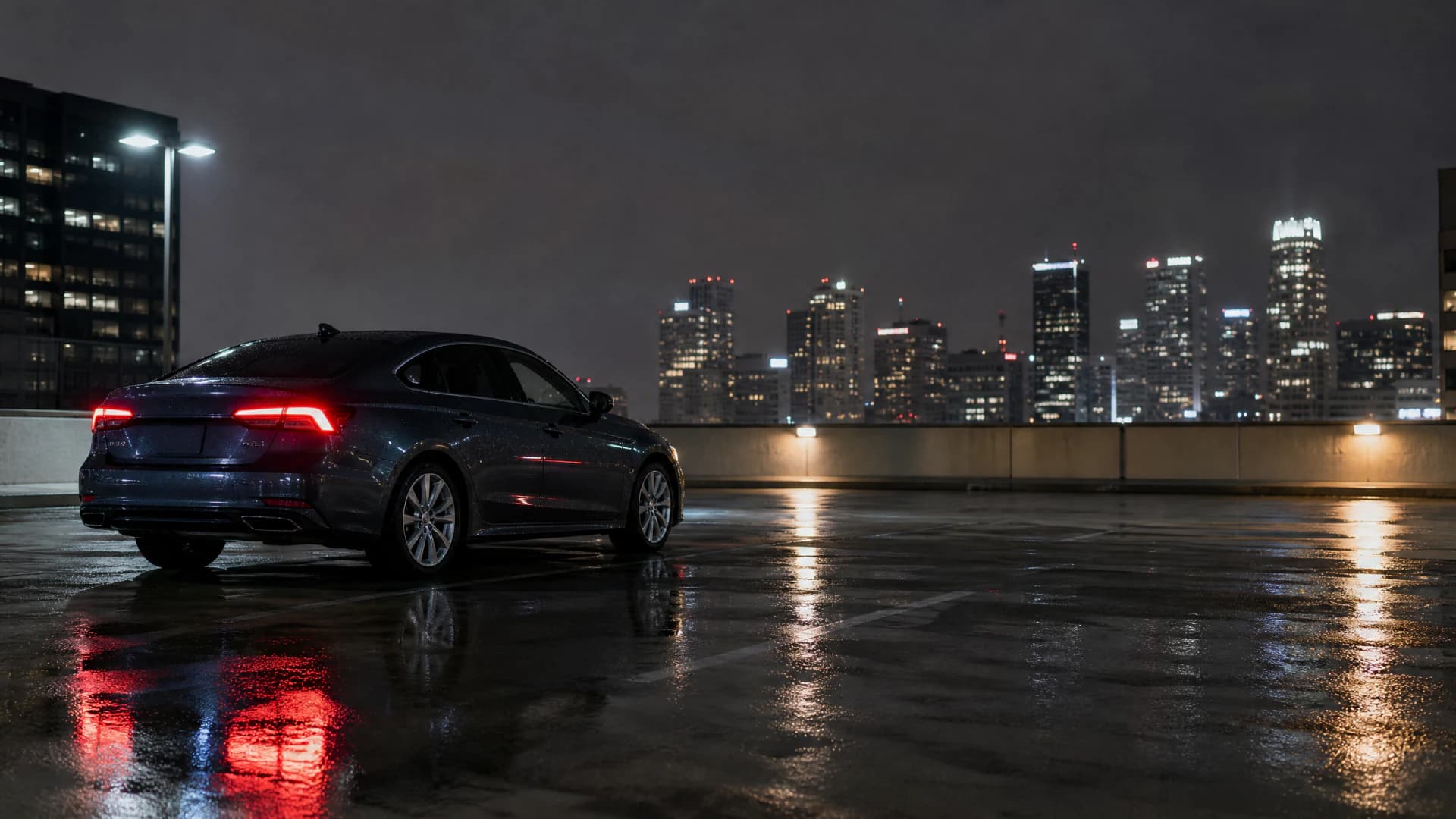
Adding a second or third vehicle to your policy does not increase your per-accident liability cap. Each car carries the same $50,000 ceiling, and that ceiling applies to the incident, not to the number of vehicles you own.
Related Articles
Why Multi-Vehicle Households Often Exceed the Minimum
Households with multiple vehicles typically carry higher liability limits than the state minimum, not because Oklahoma requires it, but because the exposure increases with the number of drivers and trips. A household with three cars and three drivers makes more trips per year than a single-car household, which increases the statistical likelihood of a liability claim. The minimum 25/50/25 coverage protects you in minor accidents — rear-ending a single vehicle at low speed, causing a fender-bender with minor injuries — but it does not cover the cost of a serious multi-vehicle collision or an accident involving significant injuries.
Medical costs in Oklahoma frequently exceed $25,000 per person for injuries requiring surgery, extended hospital stays, or long-term rehabilitation. A single serious injury can exhaust your per-person limit, and a collision involving two or three injured parties can exhaust your per-accident cap within hours of the incident. When your liability coverage is exhausted, the injured parties can pursue your personal assets — your home, savings, and future wages — to cover the remaining costs.
Carriers writing multi-vehicle policies in Oklahoma include Geico, Progressive, State Farm, Allstate, Farmers, and Liberty Mutual. Most offer liability limits well above the state minimum — 50/100/50, 100/300/100, or higher — and the incremental cost of increasing your limits is typically lower than the cost of adding collision or comprehensive coverage to a second vehicle. Comparing quotes at higher liability limits across carriers that write your household's vehicles is the most reliable way to understand what increased protection costs.
12%
Oklahoma Uninsured Motorist Rate
Twelve percent of Oklahoma drivers carry no insurance, which means roughly one in eight vehicles on the road has no liability coverage to pay your medical bills or repair costs if that driver hits you. The state does not require uninsured motorist coverage, but many multi-vehicle households add it to protect against drivers who carry no coverage or only the 25/50/25 minimum.
Oklahoma insurance statistics, 2023
Proof of Insurance and Electronic Verification
Oklahoma verifies insurance electronically through the Oklahoma Compliance Verification System (OCIVS), which connects your vehicle registration to your insurer's database in real time. When you register a vehicle or renew your registration, Service Oklahoma checks OCIVS to confirm active coverage. You do not submit a paper insurance card at registration — the system pulls your coverage status automatically. If OCIVS shows no active policy, your registration is denied or suspended until coverage is verified.
You must still carry proof of insurance when driving. Oklahoma accepts a paper insurance card, a digital card displayed on your phone, or a policy declaration page showing your vehicle, coverage limits, and policy dates. Law enforcement and Service Oklahoma accept all three formats equally. If you're stopped and cannot provide proof, you face a fine and potential license suspension even if you have active coverage — the violation is failure to provide proof, not failure to carry insurance.
Compare Carriers and Confirm Your Household's Coverage
Confirming that each vehicle on your policy meets Oklahoma's 25/50/25 minimum is the first step. Deciding whether to increase your liability limits, add uninsured motorist coverage, or structure your policy to protect your household's assets is the second. Carriers rate multi-vehicle policies differently — some offer larger multi-car discounts, others price higher liability limits more competitively — and the only way to know what your household qualifies for is to compare quotes from carriers writing Oklahoma policies. Request quotes at the state minimum and at higher liability limits so you can see the incremental cost of increased protection and make an informed decision about what your household needs.
What the 25/50/25 Minimum Actually Covers
$25,000 bodily injury per person means your liability coverage pays up to $25,000 for injuries to any single person in an accident you cause. This per-person cap applies to each injured party individually.
$50,000 bodily injury per accident is the total your coverage pays for all injuries in a single collision, regardless of how many people are hurt. $25,000 property damage covers damage to other vehicles, buildings, fences, or property you hit.
Get Your Free Quote
Get My Oklahoma Car Insurance QuoteFrequently Asked Questions
Does Oklahoma require the same liability limits on every vehicle I own?
Yes. Oklahoma requires 25/50/25 liability on every registered vehicle. Each car on your policy must carry $25,000 bodily injury per person, $50,000 per accident, and $25,000 property damage. The minimums apply per vehicle, not per policy.
No. The $50,000 per-accident bodily injury cap applies to the incident, not to the number of vehicles you own. If you cause an accident while driving one of your three insured cars, your coverage pays up to $50,000 total for all injuries in that collision, regardless of how many cars are on your policy.
What happens if my liability coverage is exhausted in an accident?
When your coverage limit is reached, you are personally liable for the remaining costs. Injured parties can pursue your personal assets — your home, savings, and future wages — to cover medical bills, lost wages, and other damages your policy did not pay.
Does Oklahoma require uninsured motorist coverage on multi-vehicle policies?
No. Oklahoma does not mandate uninsured motorist coverage. However, 12% of Oklahoma drivers carry no insurance, and many households with multiple vehicles add uninsured motorist coverage to protect against drivers who have no liability coverage or only the state minimum.
How does Oklahoma verify that my vehicles are insured?
Oklahoma uses the Oklahoma Compliance Verification System (OCIVS), which connects your vehicle registration to your insurer's database electronically. When you register or renew a vehicle, Service Oklahoma checks OCIVS to confirm active coverage. You must still carry proof of insurance when driving — a paper card, digital card, or policy declaration page.
Which carriers write multi-vehicle policies in Oklahoma?
Geico, Progressive, State Farm, Allstate, Farmers, Liberty Mutual, Nationwide, Travelers, and USAA all write multi-vehicle policies in Oklahoma. Most offer liability limits above the 25/50/25 minimum and multi-car discounts. Comparing quotes from carriers that write your household's vehicles shows you what increased liability limits cost.