
Allstate Multi-Car Coverage — Oklahoma
Free to compare
Does Allstate Write Multi-Car Policies in Oklahoma
Allstate writes auto insurance in Oklahoma and accepts households insuring two or more vehicles on a single policy. The carrier operates in the state under NAIC company code 19232 and holds an AM Best financial strength rating of A+ (Superior). Allstate's Oklahoma footprint includes standard multi-car policies for households with titled vehicles garaged at the same address.
Allstate does not appear in Oklahoma's SR-22, non-owner, or after-DUI carrier roster. The state does not use an SR-22 certificate—Oklahoma repealed its insurer-certified-policy mechanism in 2009—but carriers that write non-owner policies or accept high-risk drivers after suspension are tracked separately. Allstate's absence from that roster means the company underwrites standard-risk households with titled vehicles, not single-driver or post-violation scenarios.
“Allstate's absence from Oklahoma's non-owner roster means the company underwrites standard-risk households with titled vehicles, not single-driver scenarios.”
Get More Than the Oklahoma Minimum for Less
Get My Oklahoma Car Insurance Quote$25,000 / $50,000 / $25,000
Oklahoma Minimum Liability
Oklahoma requires $25,000 bodily injury per person, $50,000 per accident, and $25,000 property damage. Every vehicle on an Allstate multi-car policy must carry at least these limits to meet state registration requirements.
Oklahoma statutes Title 47
How Allstate's Multi-Car Discount Works in Oklahoma
Allstate's multi-car discount applies when two or more vehicles sit on the same policy, titled to the same household, and garaged at the same address. The discount mechanism reduces the per-vehicle base rate when the policy covers multiple cars. Adding a second vehicle to an existing single-car policy triggers a re-rating of the entire policy, not a flat add-on amount.
The discount requires every vehicle to remain on the policy for the full term. Removing a vehicle mid-term re-rates the policy again and may eliminate the multi-car discount tier. A vehicle titled to someone outside the household—such as a college student with an out-of-state title or a roommate's car—does not qualify for the same-policy discount even if garaged at the same address.
Allstate's underwriting treats each vehicle's characteristics separately within the multi-car policy. A household insuring a sedan and a truck pays different base rates for each vehicle, then the multi-car discount applies to the combined premium. The discount does not flatten the per-vehicle rate; it adjusts the total policy cost downward based on the number of vehicles.
Allstate does not write non-owner policies in Oklahoma. If your household includes a driver without a titled vehicle, that driver must be listed on the policy but cannot trigger the multi-car discount alone.
Related Articles





Adding a Vehicle to an Existing Allstate Policy in Oklahoma
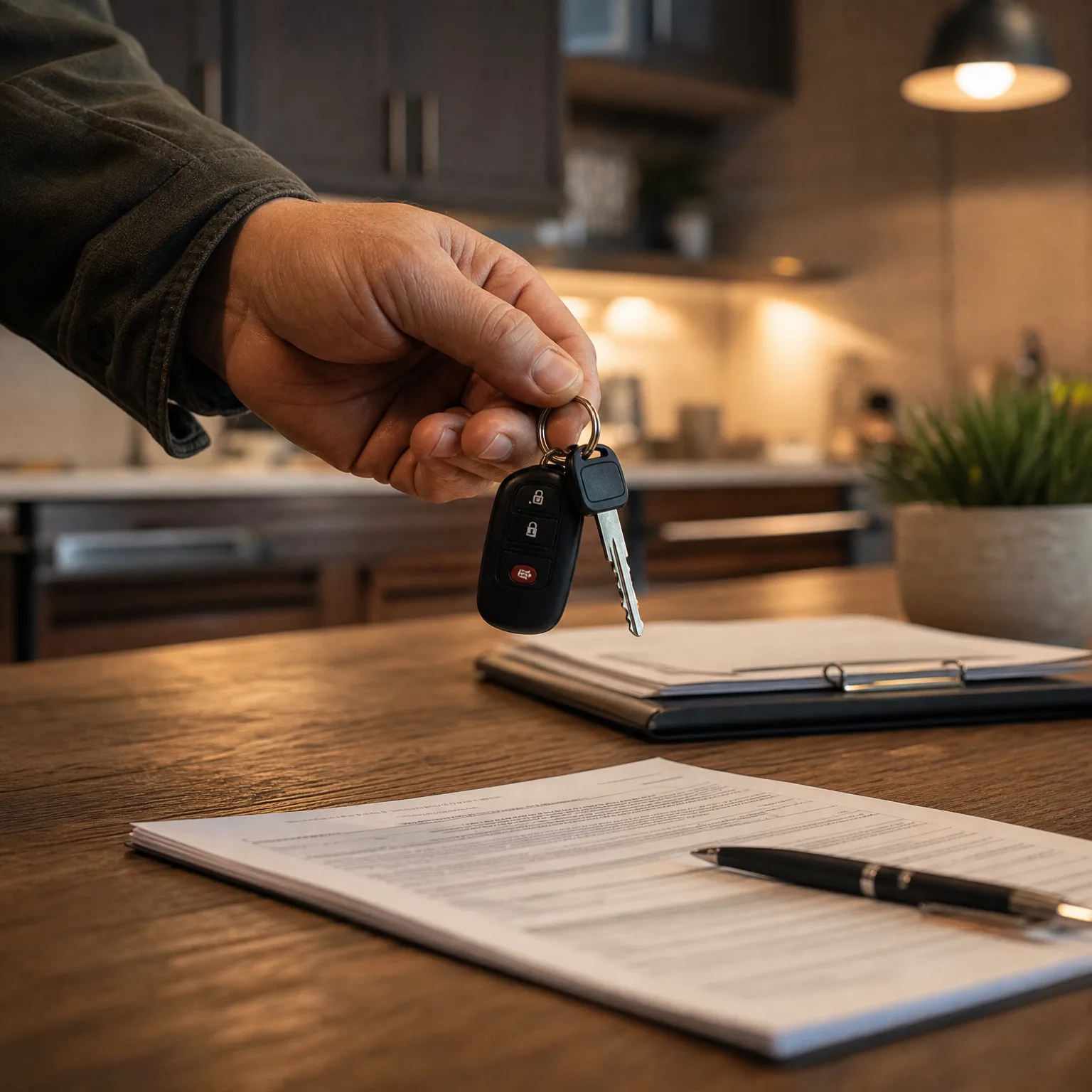
Oklahoma carriers typically provide a grace period—often 14 to 30 days—during which a newly purchased vehicle is automatically covered under an existing policy at the same coverage level as the vehicle already on the policy. Allstate's specific grace period is stated in the policy declarations page. The grace period starts the day you take possession of the new vehicle, not the day you notify Allstate.
You must report the new vehicle to Allstate before the grace period expires. Failure to report within the window can result in denial of a claim involving the unreported vehicle. Reporting the vehicle triggers a mid-term policy re-rating: Allstate recalculates the premium based on the new vehicle's make, model, year, and garaging location, then applies the multi-car discount to the updated total.
The premium adjustment is prorated for the remainder of the current term. At renewal, the policy re-rates again with the new vehicle included from the start of the term. If the newly added vehicle is financed or leased, the lienholder requires proof of comprehensive and collision coverage, not just the state minimum liability. Allstate will add those coverages to the new vehicle when you report it, and the premium reflects the full coverage cost.
12%
Oklahoma Uninsured Motorist Rate
Twelve percent of Oklahoma motorists drive uninsured. Households with multiple vehicles often add uninsured motorist coverage to protect against drivers who carry no insurance, even though Oklahoma does not mandate it.
Insurance Research Council 2023
Comparing Allstate to Other Oklahoma Multi-Car Carriers
Oklahoma's multi-car carrier roster includes State Farm, GEICO, Progressive, Farmers, Nationwide, and Travelers, all of which write standard multi-car policies and accept households with two or more titled vehicles. State Farm and GEICO operate as preferred-tier carriers with stricter underwriting; Progressive and Farmers write both standard and non-standard tiers. Allstate sits in the standard tier alongside Nationwide and Travelers.
Carriers that write non-owner policies—Bristol West, The General, GAINSCO, Mercury General, and National General—serve households where a driver needs coverage without owning a vehicle. Allstate does not write non-owner policies, so households with a licensed driver who does not own a car must look to those carriers or add the driver to an existing titled-vehicle policy. Comparing multi-car carriers means requesting quotes from at least three carriers that write your household's vehicle count and driver profile, then comparing the total annual premium and the per-vehicle breakdown.
What to Do If Allstate Does Not Fit Your Household
If Allstate declines your household or quotes a premium higher than competing carriers, the next step is to compare quotes from carriers that write Oklahoma multi-car policies: State Farm, GEICO, Progressive, Farmers, Nationwide, and Travelers. Each carrier underwrites differently, and a household Allstate declines may qualify for standard rates with another carrier.
Households with a driver who needs non-owner coverage or who are reinstating after a suspension should request quotes from Bristol West, The General, GAINSCO, Mercury General, or National General. These carriers write non-standard and non-owner policies in Oklahoma and accept drivers Allstate does not. Households combining a titled-vehicle policy with a non-owner policy for a household member can structure two separate policies—one multi-car policy for the titled vehicles, one non-owner policy for the driver without a car—rather than forcing all drivers onto a single policy that may not fit.

Compare Oklahoma Multi-Car Carriers Now
Allstate writes Oklahoma multi-car policies for standard-risk households with titled vehicles, but the company does not write non-owner or high-risk coverage. If your household owns two or more vehicles and all drivers have clean records, request an Allstate quote alongside quotes from State Farm, GEICO, and Progressive. If your household includes a driver without a titled vehicle or a driver reinstating after suspension, compare carriers that write non-owner policies: Bristol West, The General, and GAINSCO. Use the comparison tool to request quotes from carriers that write your household's vehicle count and driver profile, then compare the total annual premium and the per-vehicle breakdown to find the policy that fits.
Which Oklahoma Households Qualify for Allstate Multi-Car Coverage
Households that qualify typically own two or more vehicles titled to the same person or married couple, garaged at the same address, and driven by household members with no recent suspensions or major violations. Allstate accepts drivers with minor violations—such as a single speeding ticket—but does not write policies for drivers who need non-owner coverage or who are reinstating after a suspension.
Households combining policies after marriage or a move can consolidate two separate Allstate policies into one multi-car policy. The consolidation re-rates both vehicles on the new combined policy, and the multi-car discount applies to the total. Households where one spouse has an existing Allstate policy and the other has a policy with a different carrier can transfer the second policy to Allstate, but the transfer requires underwriting approval and may not always lower the combined premium.
Get Your Free Quote
Get My Oklahoma Car Insurance QuoteFrequently Asked Questions
Does Allstate offer a multi-car discount in Oklahoma?
Yes. Allstate applies a multi-car discount when two or more vehicles sit on the same policy, titled to the same household, and garaged at the same address. The discount reduces the per-vehicle base rate and applies to the combined policy premium.
Can I add a vehicle to my Allstate policy mid-term in Oklahoma?
Yes. Oklahoma carriers typically provide a 14- to 30-day grace period during which a newly purchased vehicle is automatically covered. You must report the new vehicle to Allstate before the grace period expires to avoid claim denial. Reporting triggers a mid-term re-rating of the policy.
Does Allstate write non-owner car insurance in Oklahoma?
No. Allstate does not appear in Oklahoma's non-owner carrier roster. Households with a driver who needs coverage without owning a vehicle should request quotes from Bristol West, The General, GAINSCO, Mercury General, or National General.
What is Oklahoma's minimum liability insurance requirement?
Oklahoma requires $25,000 bodily injury per person, $50,000 bodily injury per accident, and $25,000 property damage. Every vehicle on a multi-car policy must carry at least these limits to meet state registration requirements.
Can I combine two Allstate policies into one multi-car policy in Oklahoma?
Yes. Households combining policies after marriage or a move can consolidate two separate Allstate policies into one. The consolidation re-rates both vehicles on the new combined policy, and the multi-car discount applies to the total.
Which Oklahoma carriers write multi-car policies besides Allstate?
State Farm, GEICO, Progressive, Farmers, Nationwide, and Travelers all write Oklahoma multi-car policies. Each carrier underwrites differently, so request quotes from at least three carriers to compare total annual premiums and per-vehicle breakdowns.