
Cheapest Car Insurance for Clean-Record Drivers — Oklahoma
Free to compare
The Clean-Record Multi-Car Pricing Gap
You've kept your driving record clean, you insure two or more vehicles, and you assume you're getting the best rate available. But if each vehicle sits on a separate policy — or if one household member's car is titled separately and carries its own coverage — you're likely paying more than households with identical records who structure their policies differently. The multi-car discount exists, but it applies only when every vehicle in the household sits on the same policy, issued to the same policyholder, and often garaged at the same address.
Oklahoma does not use SR-22 filings, and the state's minimum liability requirement is straightforward: $25,000 per person, $50,000 per accident for bodily injury, and $25,000 for property damage. Clean-record households meet these minimums easily. The pricing advantage comes from how you structure coverage across your vehicles, not from the baseline requirement. Carriers writing Oklahoma offer multi-car discounts ranging from modest to substantial, but only when the policy structure qualifies.
“The multi-car discount disappears entirely when even one household vehicle sits on a separate policy, regardless of how clean every driver's record is.”

Get More Than the Oklahoma Minimum for Less
Get My Oklahoma Car Insurance Quote$947.24
Oklahoma Average Annual Auto Premium
Per-vehicle expenditure for 2023, drawn from state insurance statistics. This figure reflects all driver profiles statewide; clean-record households with multiple vehicles on one policy typically fall below this average.
Oklahoma Insurance Department statistical filing, 2023
What Clean Record Actually Means for Multi-Car Pricing
A clean driving record means no at-fault accidents, no moving violations, no DUI or reckless-driving convictions, and no license suspensions in the lookback period carriers use — typically three to five years. Oklahoma's graduated licensing rules for teen drivers and the state's 80% observed seat-belt use rate both factor into actuarial models, but your household's clean record is the primary lever that qualifies you for preferred or standard-tier pricing.
Carriers writing Oklahoma distinguish between preferred-tier, standard-tier, and non-standard-tier business. Preferred-tier carriers — USAA, Amica, State Farm in most cases — reserve their lowest rates for clean-record households. Standard-tier carriers — Geico, Progressive, Allstate, Farmers — write clean-record business at competitive rates but also serve drivers with minor violations. Non-standard carriers — Bristol West, GAINSCO, The General — specialize in high-risk profiles and typically charge more even for clean records. Your household's clean record opens access to preferred and standard tiers; the multi-car discount applies within those tiers only when every vehicle qualifies on the same policy.
Oklahoma's 12% uninsured-motorist rate and 1.57 traffic fatalities per 100 million vehicle miles traveled both influence base rates statewide, but neither metric penalizes clean-record households directly. The pricing gap between a clean-record household with three vehicles on one policy and the same household with three separate policies can exceed the cost of adding the third vehicle outright. The discount is not cosmetic.
The multi-car discount disappears entirely when even one household vehicle sits on a separate policy, regardless of how clean every driver's record is.



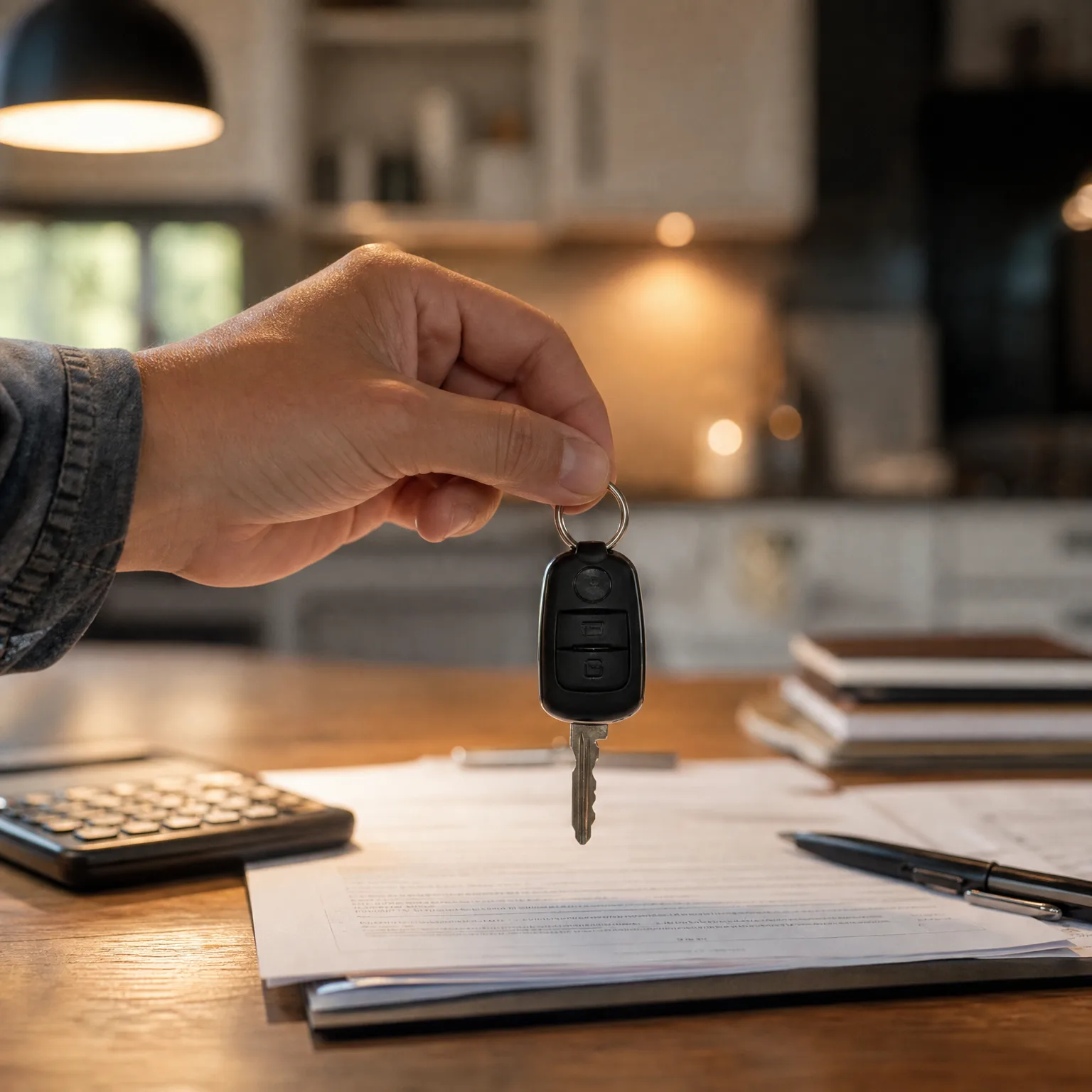
Carrier Roster and Discount Variation in Oklahoma
Eighteen carriers write auto insurance in Oklahoma with confirmed presence: Allstate, Amica, Bristol West, Clearcover, Country Financial, CSAA, Farmers, GAINSCO, Geico, Hartford, Liberty Mutual, Mercury General, National General, Nationwide, Progressive, Root, Shelter, State Farm, Travelers, and USAA. Not all offer the same multi-car discount structure, and not all write preferred-tier business for clean-record households.
Preferred-tier carriers accessible to clean-record Oklahoma households include USAA (military-affiliated only), Amica, State Farm, and CSAA. Standard-tier carriers writing clean-record multi-car business include Geico, Progressive, Allstate, Farmers, Travelers, Liberty Mutual, Nationwide, Hartford, Mercury General, and Country Financial. Non-standard carriers — Bristol West, GAINSCO, The General, National General — write clean-record households but typically at higher base rates because their underwriting models serve broader risk profiles. Root and Clearcover operate as app-based carriers with usage-based pricing; both write Oklahoma and both offer multi-car discounts, but eligibility depends on telematics data in addition to driving record.
The multi-car discount is not standardized across carriers. One carrier may reduce your premium by a fixed dollar amount per additional vehicle; another may apply a percentage discount to each vehicle on the policy; a third may tier the discount so the second vehicle receives a smaller reduction than the third. You cannot determine which carrier offers your household the lowest combined rate without comparing quotes that reflect your actual vehicle count, garaging address, and coverage selections. Generic rate comparisons that assume one vehicle and one driver do not predict multi-car pricing accurately.
Oklahoma law does not mandate uninsured-motorist coverage or personal-injury-protection coverage, but both are available as optional add-ons. If you carry either on a multi-vehicle policy, the coverage applies to every vehicle on the policy at the same limit. Raising or lowering UM or PIP limits re-rates the entire policy, not just one vehicle. This is another structural reason to consolidate every household vehicle onto one policy: coverage decisions propagate across all vehicles automatically, and the multi-car discount applies to the total premium including optional coverages.
18 carriers
Oklahoma Auto Insurance Roster
Confirmed carriers writing auto insurance in Oklahoma as of current licensing records. Not all write preferred-tier clean-record business, and multi-car discount structures vary by carrier.
State insurance department licensing data

When Separate Policies Make Sense
Consolidating every vehicle onto one policy maximizes the multi-car discount, but two situations justify separate policies even for clean-record households. First, if one household member has a violation or at-fault accident on their record and you do not, isolating that driver and their vehicle on a separate policy may prevent their surcharge from raising rates on your clean-record vehicles. Oklahoma carriers re-rate the entire policy when any listed driver's record changes, so a single ticket can increase premiums across all vehicles. Compare the cost of two separate policies — one clean, one surcharged — against the cost of one combined policy with the surcharged driver listed. The separate-policy structure sometimes costs less, but only when the surcharge is large enough to exceed the multi-car discount you forfeit.
Second, if one vehicle is a classic car, a collector vehicle, or a rarely-driven car with annual mileage below 2,500 miles, specialized low-mileage or collector-vehicle coverage may cost less than adding that vehicle to your standard multi-car policy. Carriers writing Oklahoma offer usage-based and low-mileage programs — Progressive Snapshot, Root's app-based model, and specialty carriers writing collector vehicles — that price coverage differently than standard policies. Compare the cost of adding the low-mileage vehicle to your existing policy against the cost of a separate low-mileage or collector policy. The multi-car discount may still win, but not always.
Compare Carriers That Write Your Household Structure
Oklahoma's 3,345,331 registered vehicles and 2,556,609 licensed drivers produce a ratio that suggests many households insure multiple vehicles. When you compare carriers, request quotes at the same liability limits across every vehicle on the policy. A lower premium at minimum limits does not predict which carrier offers the lowest rate at higher limits, and the multi-car discount applies to the total premium including the liability-limit tier you select.
Request quotes from at least three carriers in different tiers: one preferred-tier carrier if you qualify, one standard-tier carrier, and one app-based or usage-based carrier if your household drives below-average annual mileage. Provide identical information to each — same vehicles, same drivers, same garaging address, same coverage selections, same liability limits. The resulting quotes reflect each carrier's actual multi-car discount structure applied to your household. Generic rate estimates and state-average figures do not predict your household's cost because they do not account for vehicle count, garaging location, or the specific discount each carrier applies to multi-vehicle policies. Oklahoma Insurance Department rate comparisons published annually show wide variation between carriers even for identical coverage, and that variation widens further when multi-car discounts apply.
If you currently insure multiple vehicles on separate policies, request a quote for consolidating them onto one policy from your current carrier first. Many carriers offer the multi-car discount retroactively when you combine policies mid-term, and the administrative friction of switching carriers disappears if your current carrier matches or beats competitor quotes once the discount applies. If your current carrier cannot consolidate your vehicles onto one policy — because one vehicle does not meet underwriting guidelines, or because garaging addresses differ — that is the signal to compare carriers that write your actual household structure rather than attempting to force a structure your current carrier will not accept.
How to Structure Coverage Across Multiple Vehicles
First, every vehicle must appear on the same auto insurance policy, issued to the same named insured. If you own three cars and each sits on its own policy — even if all three policies come from the same carrier — you forfeit the multi-car discount on all three. The discount applies per policy, not per carrier relationship. Combining those three policies into one multi-vehicle policy typically lowers your total premium by more than the cost of the third vehicle alone, because the discount applies to every car on the policy, not just the additional ones.
Second, most carriers require every vehicle to be garaged at the same address. If one household member's car is garaged at a different location — a college student's apartment, a second home, or a work-provided parking space in another city — that vehicle may not qualify for the same-policy discount even if it's titled to the same household. Verify garaging-address requirements with your carrier before assuming a vehicle qualifies. Some carriers allow limited exceptions for students or military members; others do not.
Get Your Free Quote
Get My Oklahoma Car Insurance QuoteFrequently Asked Questions
Does a clean driving record guarantee the lowest car insurance rate in Oklahoma?
A clean record qualifies you for preferred or standard-tier pricing, but it does not guarantee the lowest rate. The multi-car discount — which requires every household vehicle on one policy — often produces larger savings than the clean-record discount alone. Compare carriers that write your actual vehicle count and policy structure.
Can I get the multi-car discount if my spouse and I have separate policies?
No. The multi-car discount applies only when every vehicle sits on the same policy, issued to the same named insured. Two separate policies — even from the same carrier, even for spouses in the same household — forfeit the discount on both policies. Consolidate onto one policy to qualify.
How much does the multi-car discount save in Oklahoma?
Discount structures vary by carrier. Some reduce your premium by a fixed dollar amount per additional vehicle; others apply a percentage discount to each vehicle on the policy. You cannot determine savings without comparing quotes that reflect your actual vehicle count and coverage selections from multiple carriers.
Do all Oklahoma carriers offer the same multi-car discount?
No. Eighteen carriers write auto insurance in Oklahoma, and each structures the multi-car discount differently. Preferred-tier carriers like USAA and Amica, standard-tier carriers like Geico and Progressive, and app-based carriers like Root and Clearcover all offer multi-car discounts, but the amount and structure vary. Compare quotes from carriers in different tiers.
What happens if one vehicle in my household is garaged at a different address?
Most carriers require every vehicle on a multi-car policy to be garaged at the same address. If one vehicle is garaged elsewhere — a college student's apartment, a second home, or a work location — it may not qualify for the same-policy discount. Verify garaging-address requirements with your carrier before assuming the vehicle qualifies.
Should I add a rarely-driven car to my multi-car policy or insure it separately?
Compare both options. Adding a low-mileage vehicle to your existing multi-car policy applies the multi-car discount to all vehicles, but specialized low-mileage or collector-vehicle coverage may cost less if the car is driven fewer than 2,500 miles annually. Request quotes for both structures and choose the lower total cost.
Can I combine policies mid-term to get the multi-car discount?
Yes. Most carriers allow you to consolidate separate policies into one multi-vehicle policy mid-term and apply the multi-car discount to the remaining term. Contact your carrier to request consolidation. If your current carrier cannot consolidate your vehicles, compare carriers that write multi-car policies for your household structure.