
Senior Driver Car Insurance Cost — Oklahoma
Free to compare
Why Senior Drivers Ask About Multi-Car Rates
You own two or three vehicles — maybe one for daily errands, one for a spouse, one kept for occasional use — and you're over 65. You've heard that age affects car insurance rates, but you cannot tell whether that applies to each vehicle on your policy or just to you as the primary driver. You're comparing carriers and the quotes vary by hundreds of dollars a year, even though every carrier offers a multi-car discount.
The structural reality: the multi-car discount in Oklahoma applies the same way regardless of driver age. Every vehicle on one policy qualifies. But the base rate each carrier assigns to a senior driver varies significantly, and that base rate is what the discount applies to. A smaller discount on a lower senior-driver base rate often beats a larger discount on a higher one. The carrier matters more than the discount percentage.
“A smaller discount on a lower senior-driver base rate often beats a larger discount on a higher one.”

Get More Than the Oklahoma Minimum for Less
Get My Oklahoma Car Insurance Quote$947.24
Oklahoma Average Annual Expenditure Per Vehicle
This is the 2023 statewide average across all driver ages and vehicle types. Senior drivers with clean records often pay below this figure, but rates vary by carrier pricing model and the number of vehicles on the policy.
Oklahoma Insurance Department, 2023
How Carriers Price Senior Drivers on Multi-Car Policies
Oklahoma carriers do not use a uniform age-rating model. Some carriers hold rates flat or reduce them for drivers over 65 with clean records, treating maturity as a risk-reduction signal. Others raise base rates after age 70 or 75, citing increased claim frequency in that bracket. A third group uses tiered pricing: rates drop from age 25 to 55, hold steady to 70, then rise gradually.
The multi-car discount applies after the carrier calculates your base rate. If Carrier A prices you lower as a senior driver and offers a 15 percent multi-car discount, and Carrier B prices you higher but offers a 25 percent discount, Carrier A's final premium can still be lower. The discount is a percentage of the base rate, not a flat dollar amount, so the base rate drives the outcome.
When you add a second or third vehicle, the carrier re-rates the entire policy. Each vehicle's premium reflects your driver profile, the vehicle's attributes, and the multi-car discount. The discount typically ranges from 10 to 25 percent per vehicle, applied to every car on the policy.
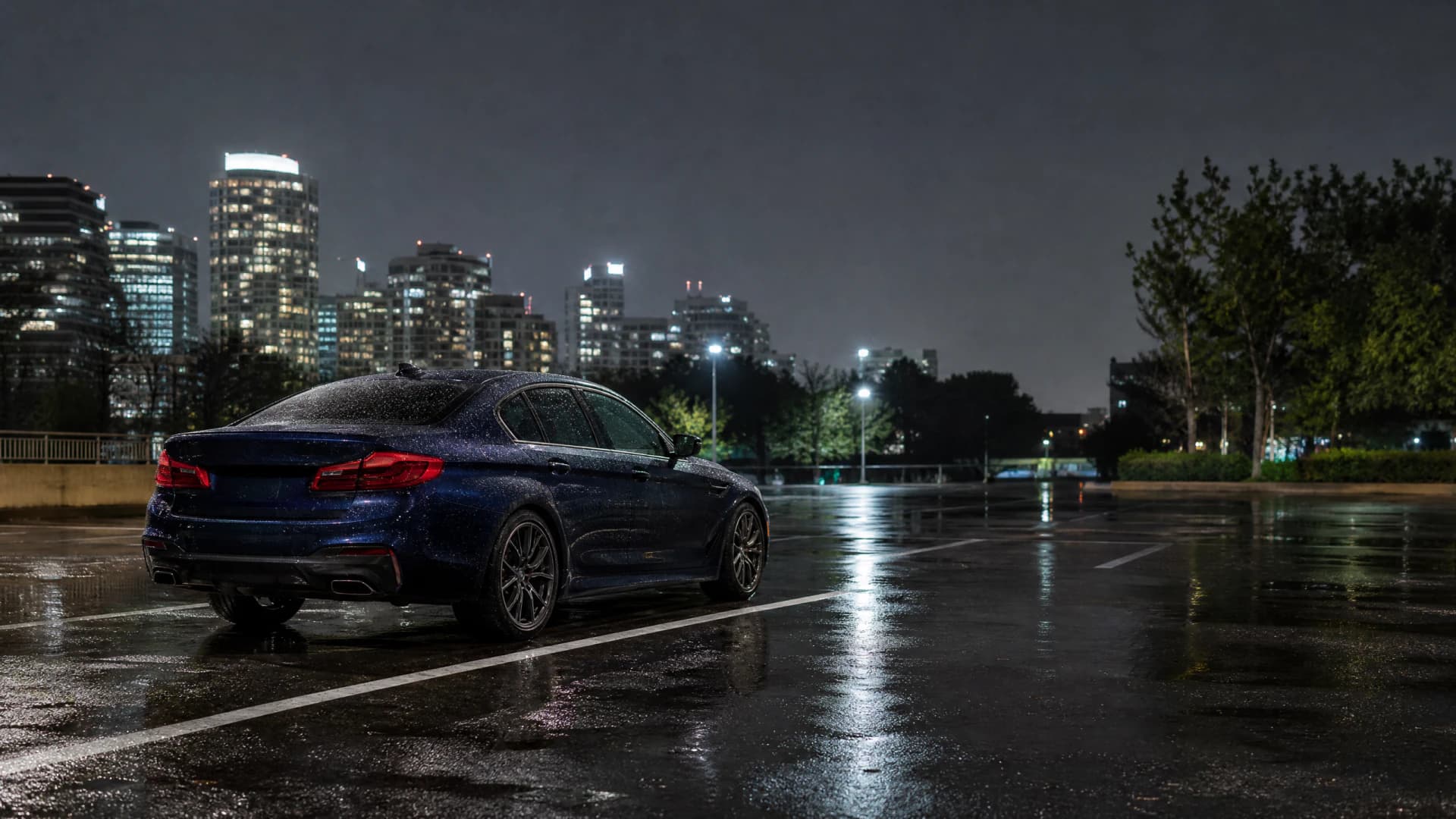
The multi-car discount applies uniformly, but the senior-driver base rate varies by hundreds of dollars across carriers — compare at least three carriers writing your vehicle count.




Oklahoma Minimum Liability and Multi-Car Coverage Decisions
Oklahoma requires $25,000 bodily injury per person, $50,000 bodily injury per accident, and $25,000 property damage per accident. These minimums apply to every vehicle on your policy. If you insure three vehicles, each must carry at least 25/50/25 liability, but you pay one combined premium for all three, not three separate minimums.
Senior drivers often ask whether carrying minimum liability on a rarely-driven second or third vehicle saves money. It does, but the savings are smaller on a multi-car policy than on separate policies. The multi-car discount already reduces the per-vehicle cost, so dropping from full coverage to minimum liability on one vehicle saves less than it would if that vehicle sat on its own policy. Compare the premium difference between full coverage and minimum liability for each vehicle before deciding.
Uninsured motorist coverage is optional in Oklahoma, but 12 percent of Oklahoma drivers are uninsured. Adding uninsured motorist coverage to a multi-car policy costs less per vehicle than adding it to a single-car policy, because the coverage premium benefits from the same multi-car discount. If you carry it on one vehicle, most carriers require it on all vehicles on the policy.
19 carriers
Oklahoma Multi-Car Carriers
Nineteen carriers write multi-vehicle policies in Oklahoma, including standard, preferred, and non-standard tiers. Senior drivers with clean records qualify for preferred and standard carriers; those with recent violations may need non-standard carriers that price age differently.
Oklahoma Insurance Department carrier roster, 2025

When to Compare Carriers Again
Carriers re-price senior drivers at different age thresholds. Some adjust rates at age 70, others at 75, and a few hold rates flat until 80. If you locked in a competitive rate at age 65, that rate may no longer be competitive at 72 if your carrier raises base rates at 70 while a competitor does not. Compare carriers every three years after age 65, even if your driving record and vehicle count stay the same.
Adding or removing a vehicle mid-term triggers a full policy re-rate. If you sell one of three vehicles, the remaining two vehicles lose part of the multi-car discount's absolute dollar value, because the discount percentage applies to fewer vehicles. But the per-vehicle rate may drop if the sold vehicle was high-mileage or high-value. Ask your carrier to quote both scenarios before you remove a vehicle from the policy.
Compare Carriers Writing Your Vehicle Count
Nineteen carriers write multi-vehicle policies in Oklahoma. Not all of them price senior drivers the same way, and not all of them offer the same multi-car discount structure. Carriers in the preferred tier — State Farm, USAA, Amica — typically hold senior rates flat or reduce them for clean-record drivers, but they may not write drivers with recent violations. Standard-tier carriers — Geico, Progressive, Allstate — write a broader risk profile and offer competitive multi-car discounts, but their senior-driver base rates vary. Non-standard carriers — Bristol West, The General, GAINSCO — write high-risk drivers and price age less aggressively, but their base rates start higher.
Request quotes from at least three carriers in the tier that matches your driving record. Provide the same vehicle details, coverage selections, and driver information to each. Compare the final annual premium for all vehicles combined, not the per-vehicle breakdown or the discount percentage. The total premium is what you pay, and it reflects both the base rate and the discount. A carrier that prices senior drivers favorably and offers a modest multi-car discount often beats a carrier that prices seniors higher but advertises a larger discount.
What Drives Senior Multi-Car Premium Differences
Driver age and claims history interact. A senior driver with no at-fault claims in the past five years signals low risk to most carriers, and many hold or reduce rates through age 75. But a senior driver with one at-fault claim in the past three years may see steeper increases than a younger driver with the same record, because some carriers model age-related claim severity more aggressively. Your claims history matters more as you age, and it applies to every vehicle on your policy.
Vehicle mix affects the discount's value. If you insure a daily-driver sedan and a rarely-driven truck, some carriers apply the multi-car discount uniformly across both vehicles, while others tier the discount by annual mileage or vehicle use. A household with two high-mileage vehicles sees a larger absolute dollar benefit from the discount than a household with one high-mileage and one low-mileage vehicle, even though the percentage is the same. Ask each carrier how they apply the discount when mileage differs across vehicles.
Get Your Free Quote
Get My Oklahoma Car Insurance QuoteFrequently Asked Questions
Does the multi-car discount apply to senior drivers in Oklahoma?
Yes. Oklahoma carriers apply the multi-car discount the same way for senior drivers as for younger households. Every vehicle on one policy qualifies for the discount, typically 10 to 25 percent per vehicle. The discount percentage does not change with driver age, but the base rate the discount applies to varies by carrier.
Do car insurance rates go up after age 65 in Oklahoma?
It depends on the carrier. Some Oklahoma carriers hold rates flat or reduce them for senior drivers with clean records, treating age as a risk-reduction signal. Others raise base rates after age 70 or 75. The rate change applies to every vehicle on your policy, so carrier selection matters more as you age.
Can I insure three vehicles on one policy as a senior driver in Oklahoma?
Yes. Oklahoma carriers write multi-vehicle policies for senior drivers with no vehicle-count limit for standard household use. Each vehicle must meet Oklahoma's $25,000/$50,000/$25,000 minimum liability requirement. The multi-car discount applies to all vehicles on the policy, reducing the per-vehicle cost.
Should I carry minimum liability or full coverage on a second vehicle?
Compare the premium difference for your specific vehicles. On a multi-car policy, dropping from full coverage to minimum liability on one vehicle saves less than it would on a separate policy, because the multi-car discount already reduces the per-vehicle cost. If the second vehicle is worth less than ten times the annual full-coverage premium, minimum liability often makes sense.
How often should senior drivers compare car insurance rates in Oklahoma?
Compare carriers every three years after age 65, even if your driving record and vehicle count stay the same. Carriers re-price senior drivers at different age thresholds — some at 70, others at 75 — and a rate that was competitive at 65 may no longer be competitive at 72 if your carrier raises base rates while a competitor does not.
Does adding uninsured motorist coverage cost more on a multi-car policy?
No. Adding uninsured motorist coverage to a multi-car policy costs less per vehicle than adding it to a single-car policy, because the coverage premium benefits from the same multi-car discount. Twelve percent of Oklahoma drivers are uninsured. If you add the coverage to one vehicle, most carriers require it on all vehicles on the policy.