Transferring Car Insurance to Oklahoma
Free to compare
When Your Out-of-State Policy Stops Covering Oklahoma Vehicles
You registered your vehicles in another state, your policy reflects that address, and now you've moved to Oklahoma with two or more cars. Your out-of-state policy does not automatically transfer — the moment you establish Oklahoma residency, your carrier treats your vehicles as garaged in Oklahoma, and your policy must meet Oklahoma's minimum liability requirements of $25,000 per person, $50,000 per accident for bodily injury, and $25,000 for property damage. Most carriers give you 30 days from the date you establish residency to update your policy address and confirm Oklahoma coverage, but that window is not a grace period for driving — if you're stopped or involved in a claim during those 30 days and your policy does not meet Oklahoma minimums, you may face a coverage denial.
The procedural friction: changing your policy address to Oklahoma does not simply add Oklahoma minimums to your existing coverage. Your carrier re-rates your entire policy based on Oklahoma zip code, Oklahoma claims history for that area, and Oklahoma underwriting rules. If your prior state had higher minimums or different mandatory coverages, your premium may drop. If your prior state had lower minimums or you were carrying only your old state's requirements, your premium will rise. Either way, every vehicle on your policy is re-rated at once, and the new premium applies from the date you report the address change, not from your next renewal.
“Changing your policy address to Oklahoma re-rates every vehicle at once, even if only one car has moved.”

Get More Than the Oklahoma Minimum for Less
Get My Oklahoma Car Insurance Quote$25,000 / $50,000 / $25,000
Oklahoma Minimum Liability
Oklahoma requires $25,000 bodily injury per person, $50,000 per accident, and $25,000 property damage. Your out-of-state policy must meet or exceed these limits the moment you establish Oklahoma residency.
Oklahoma state minimum liability requirements
What Establishing Oklahoma Residency Means for Your Policy
Oklahoma law does not define residency by a specific number of days. You establish residency when you take actions that demonstrate intent to remain: registering to vote, enrolling children in school, obtaining an Oklahoma driver license, or registering a vehicle with Service Oklahoma. The moment any of those actions occurs, your vehicles are garaged in Oklahoma for insurance purposes, and your policy must reflect that.
Your carrier does not wait for you to report the move. If you're involved in a claim and the carrier discovers your vehicles have been garaged in Oklahoma for weeks or months while your policy still lists your prior state address, the carrier can deny the claim for material misrepresentation. The 30-day window most carriers advertise is a courtesy notification period, not a coverage extension. Your obligation to update your policy address begins the day you establish residency, and your coverage must meet Oklahoma minimums from that same day.
For households insuring multiple vehicles, this creates a timing problem: you may move one vehicle to Oklahoma first while a second vehicle remains in your prior state temporarily, or you may register all vehicles in Oklahoma on the same day but discover your carrier will not write Oklahoma coverage for one of them. Both scenarios require you to act before the 30-day window closes, because waiting until day 29 to discover a coverage gap leaves you no time to find a replacement carrier.
Changing your policy address to Oklahoma re-rates every vehicle on your policy at once, even if only one car has moved. The new premium applies from the date you report the change.
Related Articles


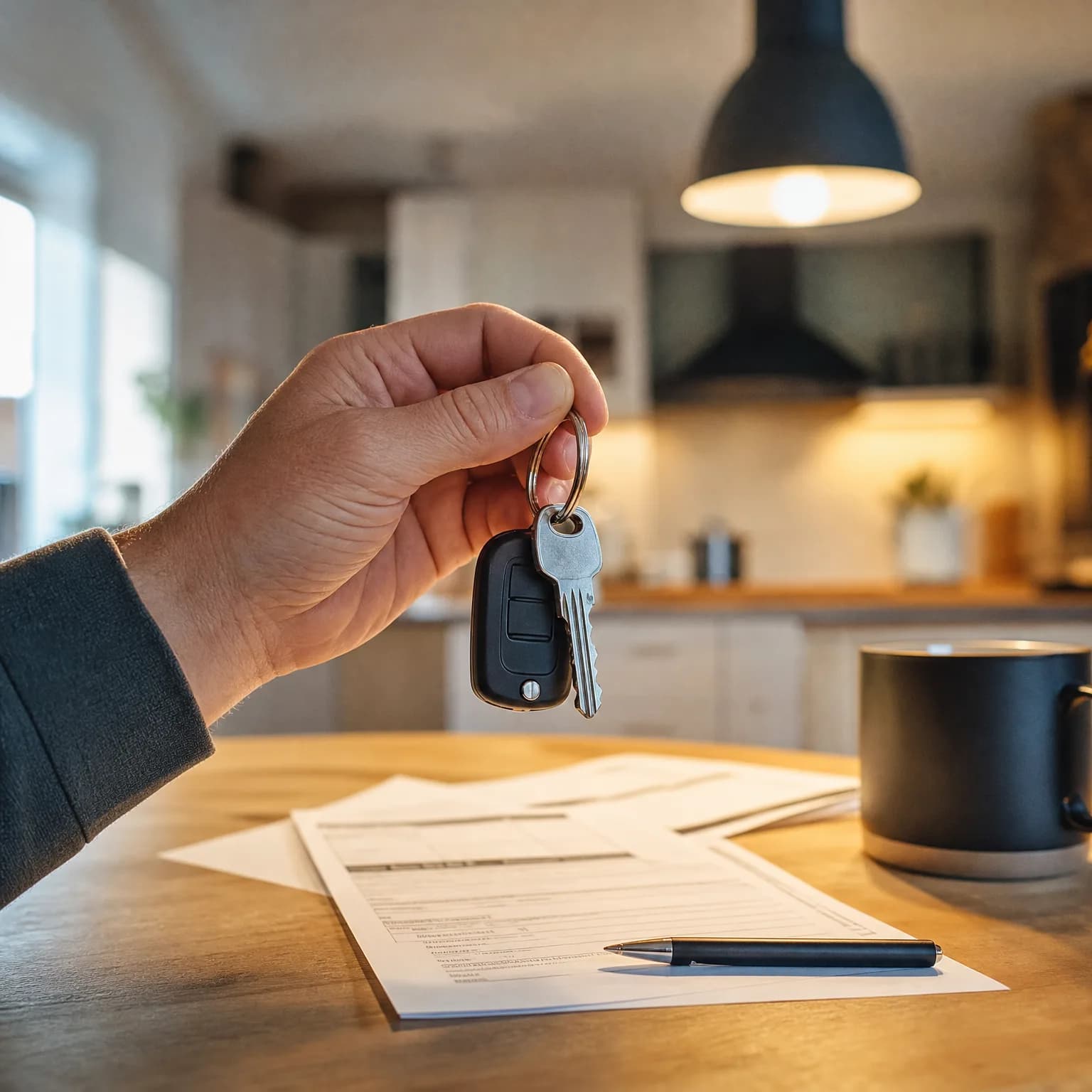


What Happens When One Vehicle Cannot Transfer
Not every carrier that wrote your policy in your prior state writes coverage in Oklahoma. If your current carrier does not operate in Oklahoma, you cannot transfer your policy — you must find a new carrier and cancel your prior policy. For multi-vehicle households, this creates a coordination problem: you need to bind Oklahoma coverage for all vehicles before canceling your out-of-state policy, or you risk a coverage gap that triggers a lapse on your driving record.
Even when your carrier does write Oklahoma coverage, the carrier may decline to renew one or more vehicles on your policy once you report the Oklahoma address. Carriers use state-specific underwriting rules, and a vehicle your carrier accepted in your prior state may fall outside the carrier's Oklahoma underwriting guidelines. High-value vehicles, modified vehicles, and vehicles with salvage titles are common examples. If your carrier declines to renew one vehicle, you have two options: move that vehicle to a different carrier and keep your remaining vehicles on your current policy, or move all vehicles to a new carrier that will write all of them.
The procedural path: before you report your Oklahoma address to your current carrier, call and ask whether the carrier writes Oklahoma coverage and whether all vehicles on your policy will remain eligible under Oklahoma underwriting rules. If the carrier confirms all vehicles are eligible, report the address change and accept the re-rated premium. If the carrier declines one or more vehicles, obtain quotes from Oklahoma carriers that will write those vehicles, bind coverage effective the same day you report your address change to your current carrier, then cancel coverage for the declined vehicles on your original policy. Do not cancel your out-of-state policy before binding Oklahoma coverage, even if you've already moved — a coverage gap of even one day appears on your driving record and raises your premium with every carrier you quote.
Oklahoma carriers that write multi-vehicle policies and accept a range of vehicle types include Geico, Progressive, State Farm, Farmers, and Allstate. Carriers that specialize in non-standard or high-risk vehicles include Bristol West and The General. If your current carrier declines a vehicle, start with these carriers when shopping for Oklahoma coverage.
12%
Oklahoma Uninsured Motorist Rate
Twelve percent of Oklahoma motorists drive uninsured. Oklahoma does not require uninsured motorist coverage, but adding it protects your household's vehicles when an at-fault driver has no insurance.
Oklahoma state insurance statistics, 2023
Oklahoma-Specific Coverage Decisions for Multi-Vehicle Households
Oklahoma does not require uninsured motorist coverage or personal injury protection, but 12 percent of Oklahoma drivers are uninsured, and the state's minimum liability limits of $25,000 per person leave significant gaps when an at-fault driver's coverage is exhausted. For households insuring multiple vehicles, uninsured motorist coverage and underinsured motorist coverage are the most cost-effective way to protect every vehicle on your policy without raising liability limits on each vehicle individually.
Collision and comprehensive coverage are optional in Oklahoma, but if you financed any vehicle on your policy, your lender requires both. If you own all vehicles outright, the decision depends on each vehicle's value: collision and comprehensive premiums are calculated as a percentage of the vehicle's actual cash value, so older vehicles with low market value cost less to replace out of pocket than to insure for collision and comprehensive over several years. For multi-vehicle households, it's common to carry full coverage on newer or financed vehicles and drop collision and comprehensive on older vehicles once their value falls below the point where annual premiums exceed replacement cost.
Compare Oklahoma Carriers That Write Multi-Vehicle Policies
Once you know your current carrier will write Oklahoma coverage for all vehicles on your policy, compare that re-rated premium against quotes from other Oklahoma carriers. The carrier that offered the best rate in your prior state may not offer the best rate in Oklahoma, because each carrier uses different rating factors and assigns different weights to Oklahoma zip codes, claims history, and vehicle types.
Oklahoma carriers that write multi-vehicle policies include Geico, Progressive, State Farm, Farmers, Allstate, Liberty Mutual, Nationwide, Travelers, and USAA. Request quotes from at least three carriers, provide identical coverage limits and deductibles for every vehicle, and compare total policy premiums rather than per-vehicle premiums. The Oklahoma car insurance requirements page provides a detailed breakdown of state-specific coverage rules and connects you to carriers that write multi-vehicle policies in Oklahoma.
How Address Changes Re-Rate Multi-Vehicle Policies
Oklahoma uses zip code, vehicle garaging location, and county-level claims data to calculate your premium. If you move from a state with higher collision or theft rates to an Oklahoma zip code with lower rates, your premium may drop. If you move from a rural area with low claims frequency to Oklahoma City or Tulsa, your premium will rise. The carrier applies Oklahoma's underwriting rules to every vehicle on your policy, regardless of whether all vehicles have physically moved to Oklahoma yet. If your policy lists three vehicles and you report an Oklahoma address, all three vehicles are re-rated as Oklahoma-garaged vehicles, even if one remains in your prior state temporarily.
This re-rating happens at the policy level, not the vehicle level. You cannot keep one vehicle rated under your prior state's rules while adding Oklahoma coverage for a second vehicle. The policy address determines the rating state for every vehicle on the policy. If you need to maintain coverage in two states simultaneously because vehicles are garaged in different locations, you need two separate policies, one for each state. Most carriers will not write a single policy covering vehicles garaged in two states, and attempting to do so by misrepresenting garaging addresses creates a material misrepresentation that voids coverage.
Get Your Free Quote
Get My Oklahoma Car Insurance QuoteFrequently Asked Questions
Do I need to cancel my out-of-state car insurance before moving to Oklahoma?
No. Keep your out-of-state policy active until you bind Oklahoma coverage for every vehicle on your policy. Canceling before you have Oklahoma coverage in place creates a coverage gap that appears on your driving record and raises your premium with every carrier.
Can I keep my out-of-state insurance after moving to Oklahoma?
No. Once you establish Oklahoma residency, your vehicles are garaged in Oklahoma for insurance purposes, and your policy must meet Oklahoma's minimum liability requirements of $25,000 per person, $50,000 per accident for bodily injury, and $25,000 for property damage. Your out-of-state policy does not meet Oklahoma requirements unless it already carries those minimums.
How long do I have to switch my car insurance to Oklahoma after moving?
Most carriers give you 30 days from the date you establish residency to report your Oklahoma address, but your coverage must meet Oklahoma minimums from the day you establish residency. The 30-day window is a notification courtesy, not a coverage extension.
Will my car insurance premium go up or down when I move to Oklahoma?
It depends on your Oklahoma zip code, your prior state's rates, and the vehicles on your policy. Your carrier re-rates your entire policy using Oklahoma's rating factors, so your premium may rise or fall depending on how Oklahoma's claims data and underwriting rules compare to your prior state.
What happens if my current carrier does not write insurance in Oklahoma?
You must find a new carrier that writes Oklahoma coverage, bind a policy for all vehicles effective before you cancel your out-of-state policy, then cancel your prior policy. Do not cancel your out-of-state policy first — a coverage gap raises your premium with every Oklahoma carrier.
Can I insure vehicles in two states on one policy?
No. Your policy address determines the rating state for every vehicle on the policy. If vehicles are garaged in two states, you need two separate policies, one for each state. Misrepresenting garaging addresses to keep vehicles on one policy is material misrepresentation and voids coverage.
Does Oklahoma require uninsured motorist coverage?
No. Oklahoma does not require uninsured motorist coverage, but 12 percent of Oklahoma drivers are uninsured. Adding uninsured and underinsured motorist coverage protects every vehicle on your policy when an at-fault driver has no insurance or insufficient coverage.