
Liability vs Full Coverage — Oklahoma
Free to compare
The Two-Car Coverage Decision
You own two vehicles and need to decide whether to carry Oklahoma's minimum liability on both or add collision and comprehensive to one or both. The decision is not binary: many households split coverage, carrying full coverage on the newer car and liability-only on the older one. The right structure depends on vehicle value, household budget, and whether you can absorb a total-loss repair out of pocket without disrupting the household's transportation.
Oklahoma requires $25,000 per person and $50,000 per accident in bodily injury liability, plus $25,000 in property damage liability. That minimum protects the other driver when you cause an accident. It does not repair your own vehicle. Collision and comprehensive coverage repair or replace your car when you hit something, roll it, or it is stolen or damaged by weather. The question is whether the cost of adding physical-damage coverage to one or both vehicles justifies the protection, or whether self-insuring makes more sense for your household.
“A household with two vehicles faces twice the total-loss exposure, and losing one car without a payout leaves the other still needing coverage.”
Get More Than the Oklahoma Minimum for Less
Get My Oklahoma Car Insurance Quote$25,000 / $50,000 / $25,000
Oklahoma Minimum Liability
Oklahoma law requires $25,000 bodily injury per person, $50,000 per accident, and $25,000 property damage. This covers the other driver's losses when you cause an accident, not your own vehicle repair or replacement.
Oklahoma Department of Public Safety
What Liability-Only Leaves Uncovered
Liability-only coverage pays for damage you cause to another driver's vehicle and their medical bills up to your policy limits. It does not pay to repair or replace your own car after an accident, regardless of fault. If you total your vehicle in a single-car rollover or hit a deer, liability coverage pays nothing toward your loss. You pay out of pocket or lose the vehicle.
For a household with two vehicles, that exposure doubles. If one car is totaled and you carry liability-only on both, you lose one vehicle entirely and still need to insure the remaining one. The household's transportation capacity drops by half, and you must replace the totaled car without any insurance payout.
Collision coverage pays to repair or replace your vehicle after an accident with another car or object, minus your deductible. Comprehensive coverage pays for theft, vandalism, fire, hail, flood, and animal strikes. Together, collision and comprehensive are called full coverage. Adding both to a policy that already carries liability transforms it from minimum coverage to full coverage.
A household with two vehicles faces twice the total-loss exposure of a single-car household, and losing one car without a payout leaves the other still needing coverage.
Related Articles




Split-Coverage Structures for Two-Car Households
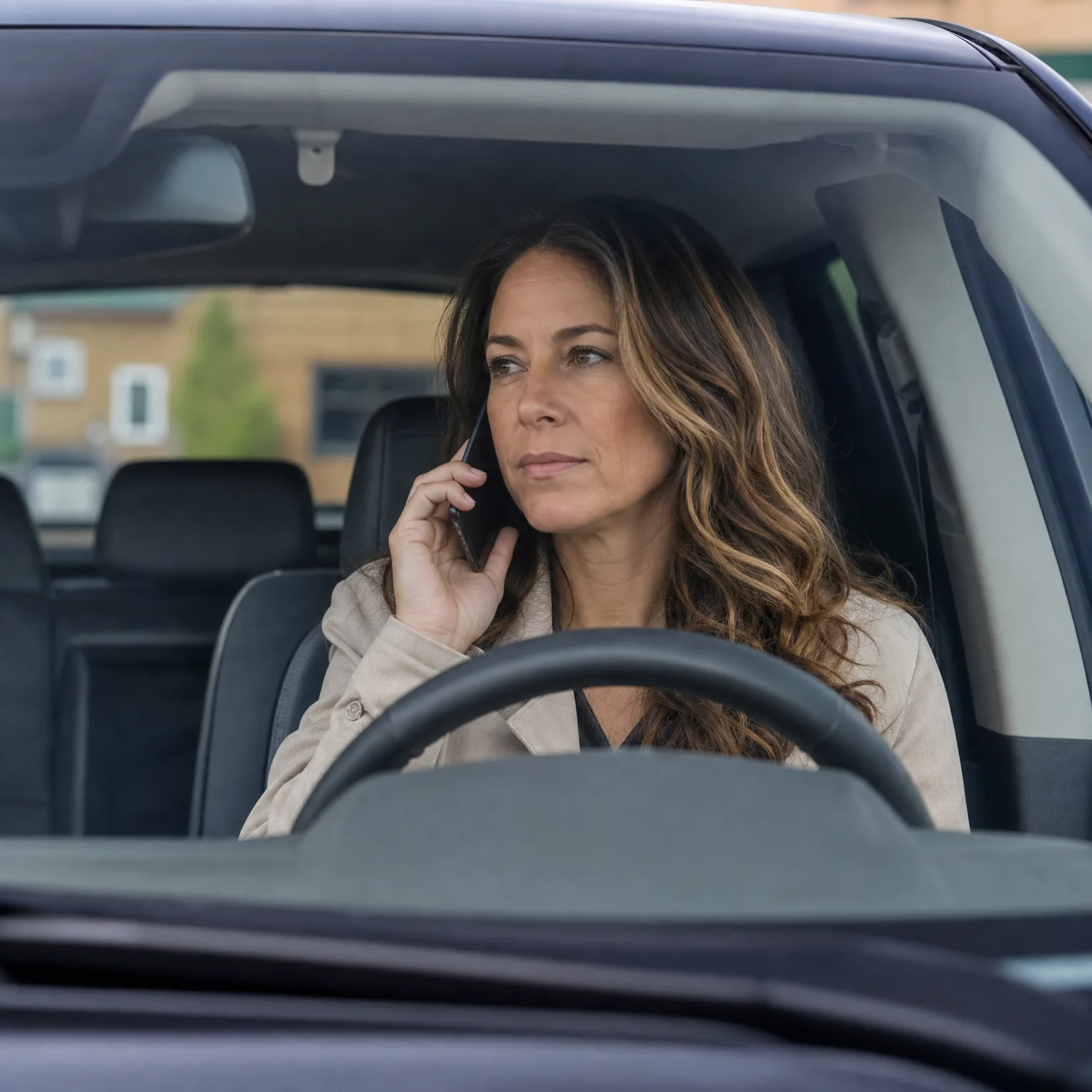
Most two-car households do not carry identical coverage on both vehicles. The common structure: full coverage on the newer or higher-value car, liability-only on the older or lower-value one. This structure protects the household's larger asset while keeping the total premium manageable. If the older car is totaled, the household still has the newer vehicle and can replace the older one without insurance proceeds. If the newer car is totaled, the insurance payout covers replacement.
A less common but defensible structure: full coverage on both vehicles when both are financed or leased. Lenders require collision and comprehensive as a condition of the loan, so the household has no choice until the loans are paid off. Once one vehicle is paid off, dropping collision and comprehensive on that car becomes an option, provided its value has depreciated enough to justify the change.
The riskiest structure: liability-only on both vehicles when both are worth more than the household can afford to replace out of pocket. This structure saves premium in the short term but exposes the household to catastrophic loss if either vehicle is totaled. A single accident can eliminate half the household's transportation capacity with no insurance recovery. Avoid this structure unless both vehicles are low-value and you have cash reserves equal to their combined replacement cost.
12%
Oklahoma Uninsured Motorist Rate
Twelve percent of Oklahoma drivers carry no insurance. If an uninsured driver totals your car and you carry liability-only, you have no collision coverage to fall back on and must pursue the at-fault driver directly, often unsuccessfully.
Insurance Information Institute, 2023
Deductible Strategy Across Multiple Vehicles
When you add collision and comprehensive to more than one vehicle on the same policy, you choose a deductible for each coverage on each car. The deductible is the amount you pay out of pocket before insurance pays the rest. Common deductible choices are $500 or $1,000. A higher deductible lowers your premium; a lower deductible means you pay less at claim time.
For multi-vehicle households, consider setting different deductibles on different cars. The newer car with full coverage might carry a $500 deductible because you want maximum claim recovery. The older car, if it still carries collision, might carry a $1,000 deductible because the vehicle's lower value makes a higher deductible reasonable. This structure tailors the coverage to each vehicle's risk profile and keeps the total premium in check.
Compare Carriers That Write Multi-Vehicle Policies
Carriers price collision and comprehensive differently, and those differences compound across multiple vehicles. One carrier may quote a lower liability-only premium but a higher collision add-on; another may price full coverage more competitively when both vehicles carry it. The only way to know which structure costs less for your household is to compare quotes with identical coverage limits and deductibles across at least three carriers.
Request quotes for three scenarios: liability-only on both vehicles, full coverage on both, and split coverage with full coverage on the newer car and liability-only on the older one. Compare the total annual premium for each structure. The carrier that wins on liability-only may not win on full coverage, and the best split-coverage price may come from a third carrier. Use the site's comparison tool to request quotes from multiple carriers writing in Oklahoma and compare the structures side by side.
How to Decide Which Vehicles Get Full Coverage
Start with the vehicle's actual cash value: what it would sell for today, not what you paid or what you owe. If the vehicle is worth less than ten times your annual collision deductible, collision coverage costs more over time than the vehicle is worth. Check your vehicle's value using a private-party sale estimate from a trusted valuation tool, not the retail or trade-in figure.
Next, calculate whether you can absorb a total loss without insurance. If losing the vehicle would force you to finance a replacement immediately, you need collision and comprehensive. If you have cash reserves equal to the vehicle's value and can replace it without disrupting the household budget, liability-only becomes viable. For multi-vehicle households, run this calculation for each car separately: the newer car may need full coverage while the older one does not.
Get Your Free Quote
Get My Oklahoma Car Insurance QuoteFrequently Asked Questions
Can I carry full coverage on one car and liability-only on the other?
Yes. Most multi-vehicle policies allow different coverage levels on different cars. Households commonly carry full coverage on the newer or higher-value vehicle and liability-only on the older one. Each vehicle's coverage is priced separately, and you choose collision, comprehensive, and deductibles for each car independently.
Does Oklahoma require collision or comprehensive coverage?
No. Oklahoma requires only liability coverage: $25,000 per person, $50,000 per accident in bodily injury, and $25,000 in property damage. Collision and comprehensive are optional unless your lender requires them as a condition of your auto loan or lease.
What happens if I total my car and only have liability coverage?
Liability coverage pays nothing toward your own vehicle repair or replacement. If you total your car in a single-vehicle accident or hit a deer, you receive no insurance payout and must pay to replace the vehicle out of pocket or lose it entirely.
How do I know if my car is worth keeping full coverage?
Compare the vehicle's actual cash value to your annual collision premium plus deductible. If the vehicle is worth less than ten times your deductible, collision coverage costs more over time than the car is worth.
Will dropping collision on one car lower my multi-car discount?
No. The multi-car discount applies because you insure multiple vehicles on the same policy, regardless of the coverage level on each car. Dropping collision and comprehensive on one vehicle reduces your total premium without affecting the discount structure.
Can I add collision back to a car after I drop it?
Yes. You can add collision and comprehensive to any vehicle on your policy at any time by contacting your carrier. The coverage takes effect immediately or on the date you specify, and your premium adjusts accordingly for the remainder of the policy term.